-
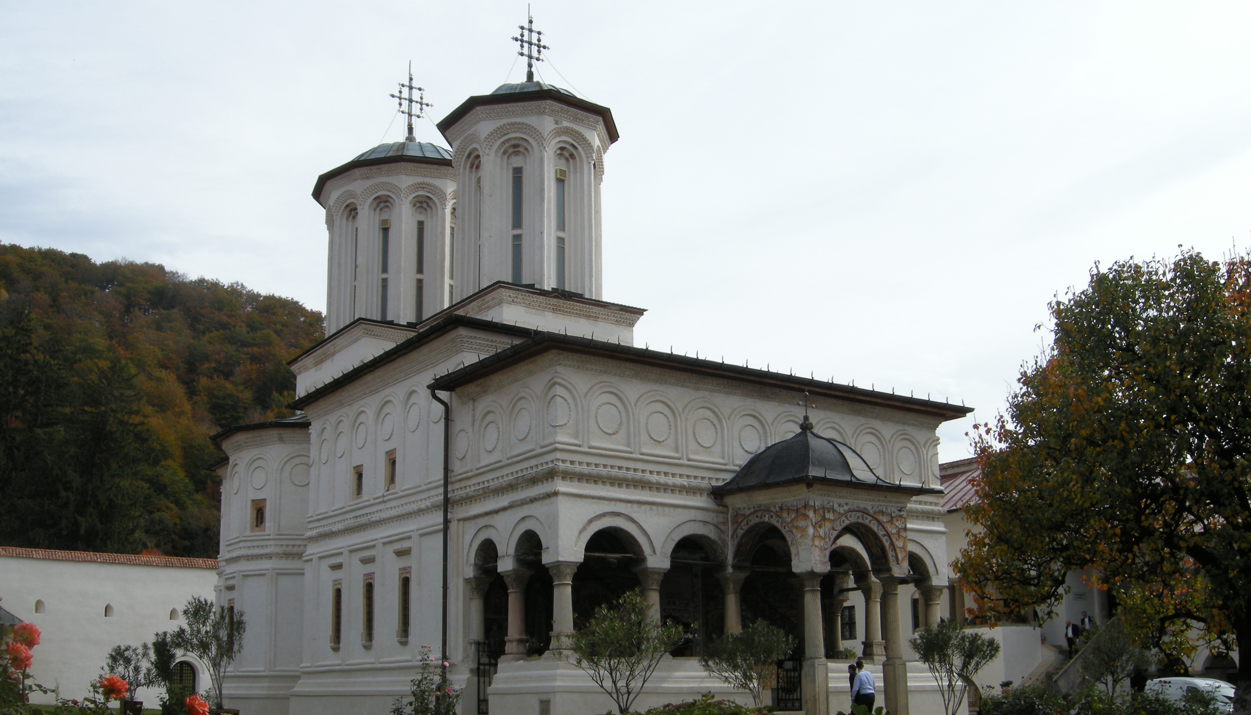
The catholicon churc Sts Constntine and Helena
-
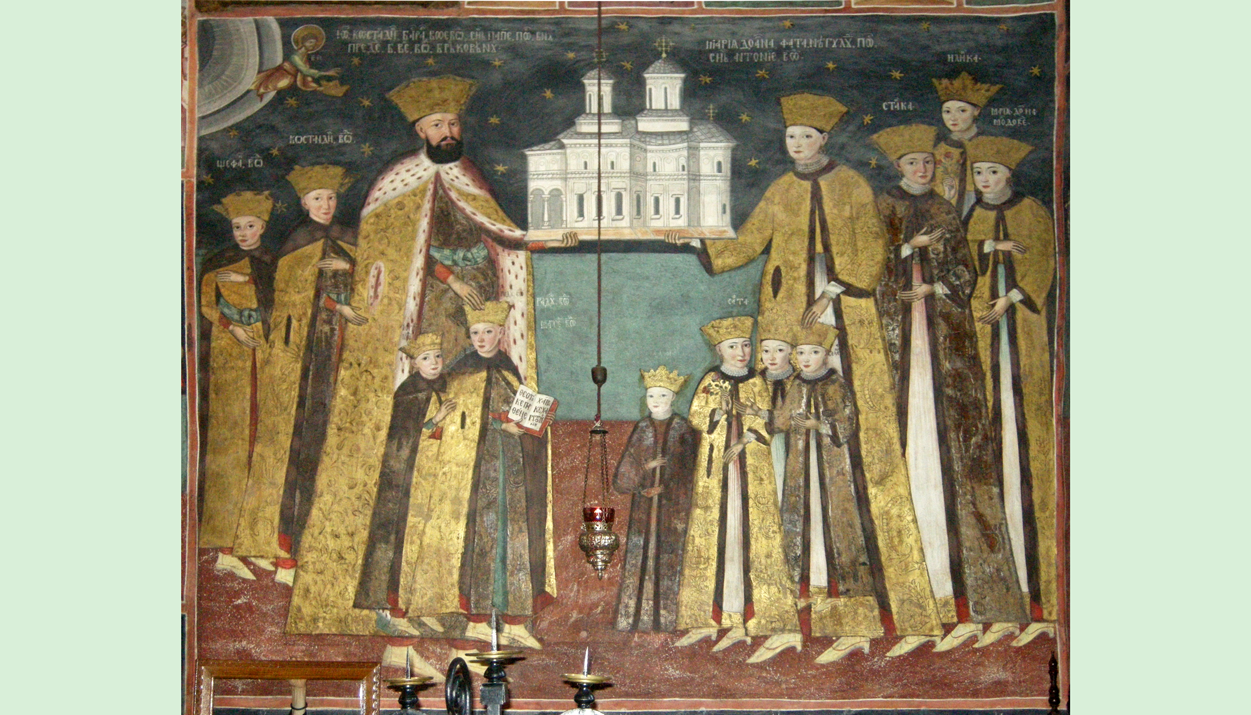
Prince Constantin Brancoveanu and his family. Dedication scene in the catholicon church Sts Constantine and Helena
-
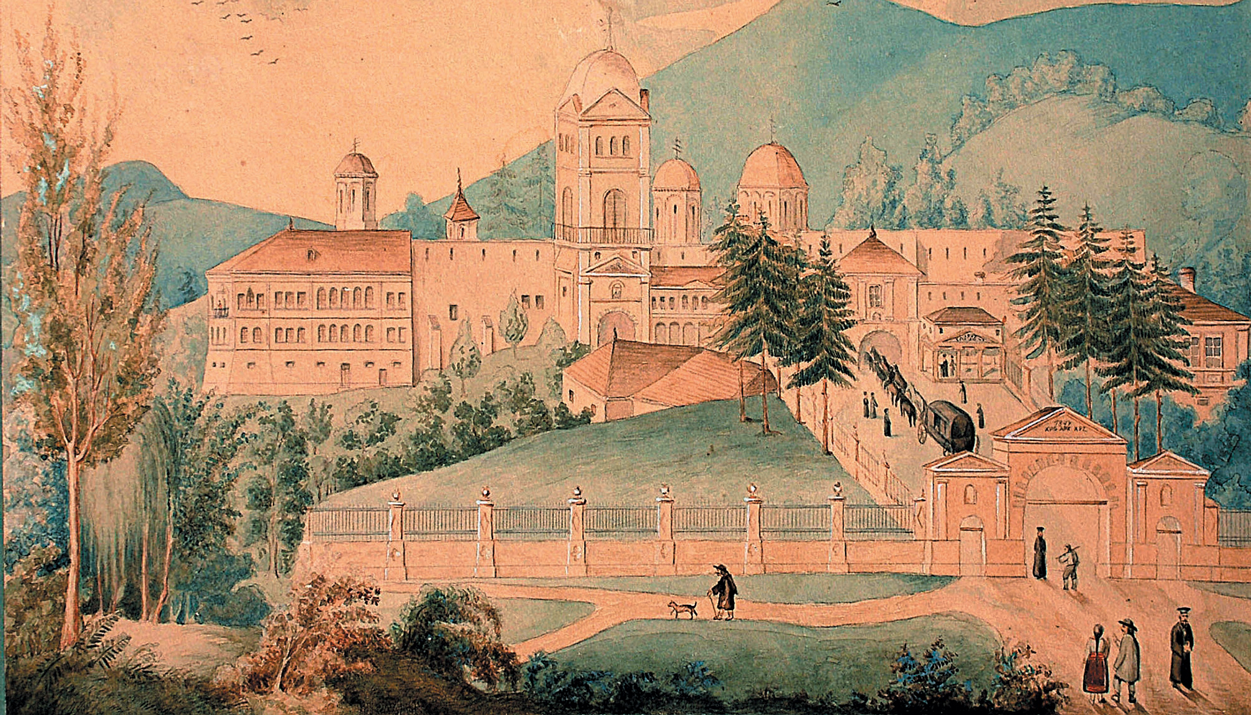
Watercolor, 1850, J. Freiwald
-
Monastery of Hurezi
1993
Ref: 597
Criterion
Criterion (ii) The artistic school, especially of mural and icon painting, established at the Monastery of Horezu in the early 18th century, being a synthesis between the oriental Byzantine art and the western art, exhibited by its original iconographic program and artistic expression of exceptional value a profound influence on religious art and architecture in the Balkan region, spreading from Wallachia into the orthodox neighbourhood.
Monastery
of Hurezi
Founded in 1690, the monastery of Hurezi is the most important edifice built by Cantacuzene Prince Constantin Brânconeanu, the ruler of the Romanian principality of Wallachia between 1688–1714, a ruler educated in western humanistic spirituality and culture but also having a strong relation with Byzantium. Together with his family he was responsible for the creation of many monastic ensembles and churches in Wallachia, with mural paintings, richly adorned with sumptuous iconostases and other decorations. This artistic effort was followed by many other noblemen and church dignitaries, giving rise to the remarkable artistic flowering art, known as Brancovan art, representing a synthesis between the oriental Byzantine art and the western art, especially the Venetian one.
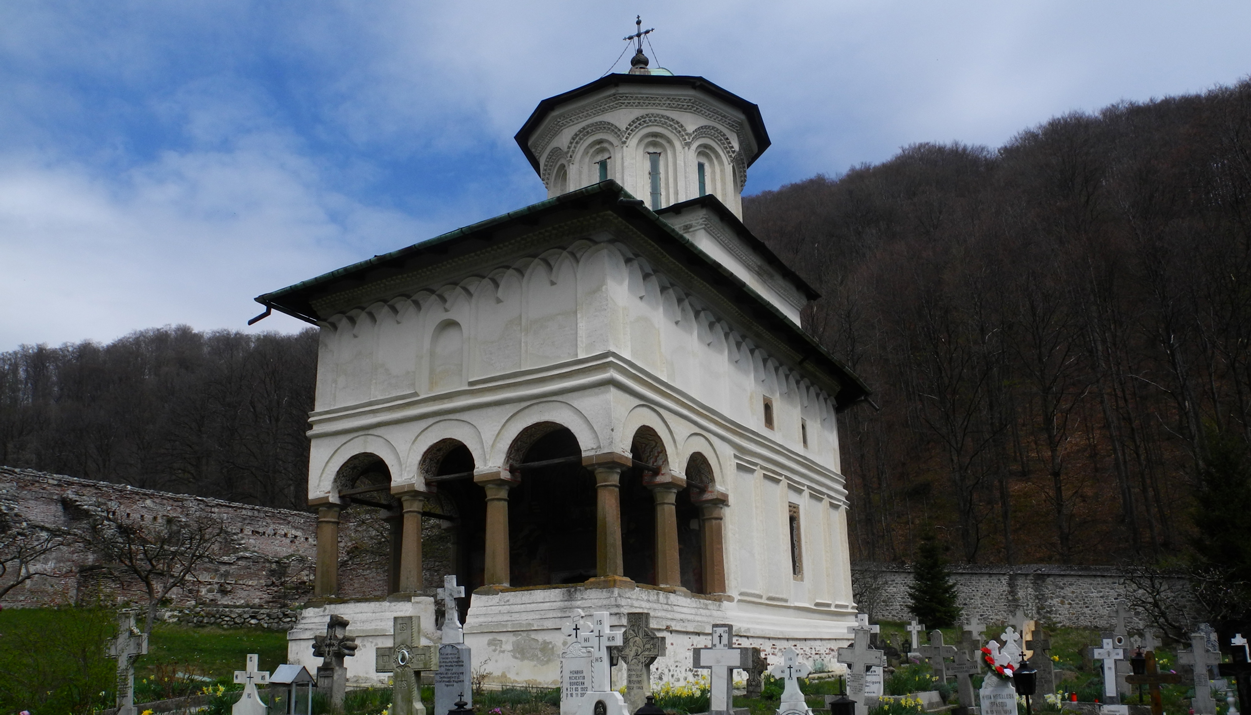
This monastic ensemble is the largest and most developed one, its architectural and artistic features make it unique both in Romania, and in South-East Europe. The ensemble of Hurezi displays a complex original programme, designed according to Renaissance structural patterns along an East–West axis, with a rectangular main precinct dominated by the Great Church, the catholicon, and the hermitage small churches placed outside the large precinct, towards the four cardinal points. The layout was planned according to the rules of the Athonite Order, around the catholicon — main church — which is enclosed by a wall, with the infirmary church (Bolniţa) in its neighborhood and surrounded by the Saints Apostles and Saint Stephen smaller hermitage churches.
The catholicon of the Monastery of Hurezi, dedicated to Saints Constantine and Helena, was built between 1690–92 and the interior decoration was completed two years later by the work of the Greek artist Constantinos, who founded the school of mural and icon painters of Hurezi. The Great Church, which was meant to house the necropolis of Prince Brâncoveanu’s family, is three-aisled with a very large narthex, following the pattern laid down by the church of the Monastery of Argeș (1512–17). The interior walls are entirely covered with frescoes in the tradition of Byzantine art — in the narthex, the lower tier of the walls is filled with votive pictures of Constantin Brâncoveanu, his wife, and their 11 children. The east wall of the exonarthex is entirely occupied by a large Last Judgment. The carved wooden iconostasis is of an exceptional high quality, combining decorative elements of Eastern and Western art.