-
Image description
-
Image description
1993/ Ref: 598bis
Criterion
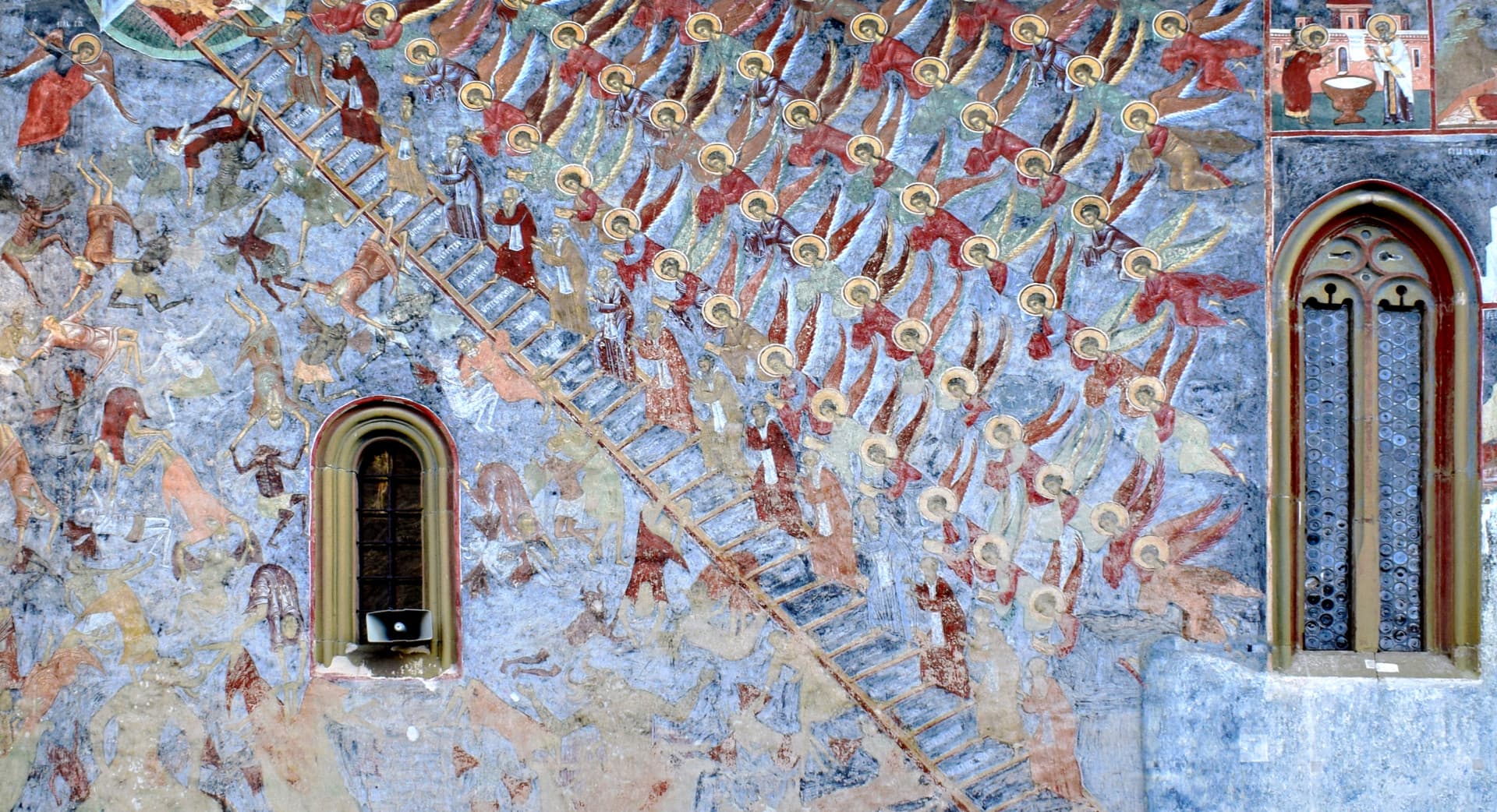
Criterion (i) The external paintings of the churches of Northern Moldavia cover all the facades. They embody a unique and homogeneous artistic phenomenon, directly inspired by Byzantine art. They are masterpieces of mural painting, and are of outstanding aesthetic value in view of their consummate chromatism and the remarkable elegance of the figures. They present cycles of events taken from the Bible and the Holy Scriptures, in the Orthodox Christian tradition.
Criterion (iv) The idea of completely covering the external facades of churches by paintings is an eminent example of a type of church construction and decoration adopted in Moldavia, which illustrates the cultural and religious context of the Balkans from the late 15th century to the late 16th century.
Churches of Moldavia
The churches with exterior mural paintings of northern Moldavia, built from the late 15th century to the late 16th century, are masterpieces inspired by Byzantine art. These eight churches — Church of the Holy Rood of Patrăuţi (1487), Church of St George of the Monastery of Voroneţ (1488, 1547), Church of the Beheading of St John the Baptist of Arbore (1503), Church of St George of St John the New Monastery of Suceava (1514–1522), Church of the Assumption of the Virgin of the Monastery of Humor (1530), Church of St Nicholas of the Monastery of Probota (1530), Church of the Annunciation of the Monastery of Moldoviţa (1532) (all inscribed on the List in 1993) and Church of the Resurrection of the Monastery of Suceviţa (1584–1601), added to the List as an extension in 2010 — are unique, authentic and particularly well preserved.
Far from being mere wall decorations, the paintings form a systematic covering on all the facades and the entire interior walls and represent complete cycles of religious themes. Their exceptional composition, the elegance of the characters, and the harmony of the colours, together with their architecture, blend perfectly with their monastic ensembles and the surrounding countryside and natural landscape.
This coherent group of churches illustrates the “Moldavian Style”, which represents an original synthesis of architecture and art, characterized by Byzantine plans raised with Gothic influences, dating and crystallized during the period of the glorious reign of Stephen the Great (1457–1504) — the great defender of Christianity and his direct descendants: Bogdan the 3rd (1504–1517), Stephen the Young (1517–1527) and Petru Rareș (1527–1538, 1541–1546). It was a period of constant church building efforts, made by princes, boyars and church hierarchs, which would last until the 17th century. This style would come together in architecture but also in the main iconographic programme for interior and external mural paintings. The aesthetic and spiritual programme will contain the complete covering of all the facades of these churches with outstanding cycles of religious themes, during the 16th century.
These eight churches have undergone no significant alteration in the course of history. They preserve their original late 15th century to the late 16th century architecture and set of mural paintings. The monasteries and medieval precincts that surrounds them have conserved their historic enclosure. The picturesque surrounding countryside landscape, rural and forested, has undergone only few transformations and changes up to the present day.
Church of the Ressurection, Sucevita Monastery
-
Church of the Ressurection, Sucevita Monastery
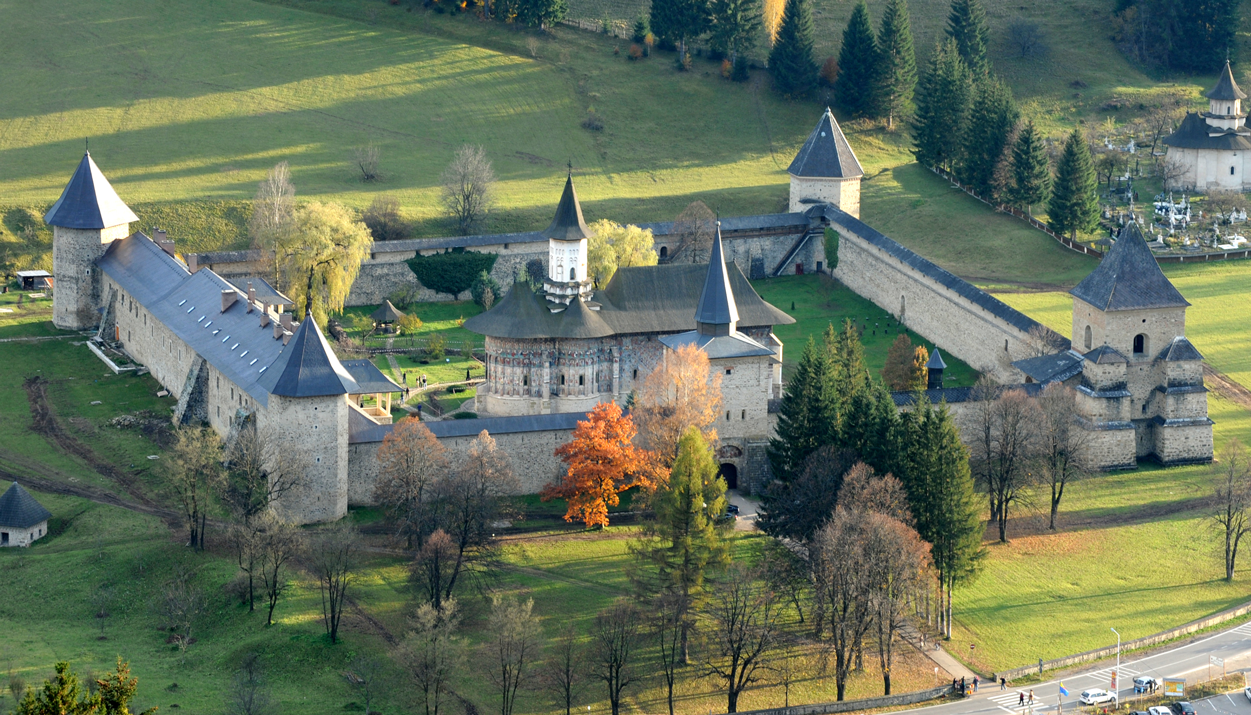
Construcția, ridicată între anii 1584 – 1586, a fost inițiată de Gheorghe Movilă, episcop de Rădăuți, viitor mitropolit al Moldovei, probabil cu concursul fraților săi Ieremia și Simeon. Pictura a fost terminată în 1596, (sau 1601), ca lucrare a doi frați iconari, Ioan și Sofronie.
Ceea ce conferă aspectul unic al bisericii este pictura interioară și cea exterioară, cu o mare vitalitate a culorilor, compusă din sute de scene, supusă exigențelor teologice și estetice din cadrul complexului program iconografic ce se regăsește și la celelalte biserici din nordul Moldovei înscrise în Lista patrimoniului mondial.
Church of the Annunciation, Moldovita Monastery
-
Church o Annunciation, Moldovita Monastery
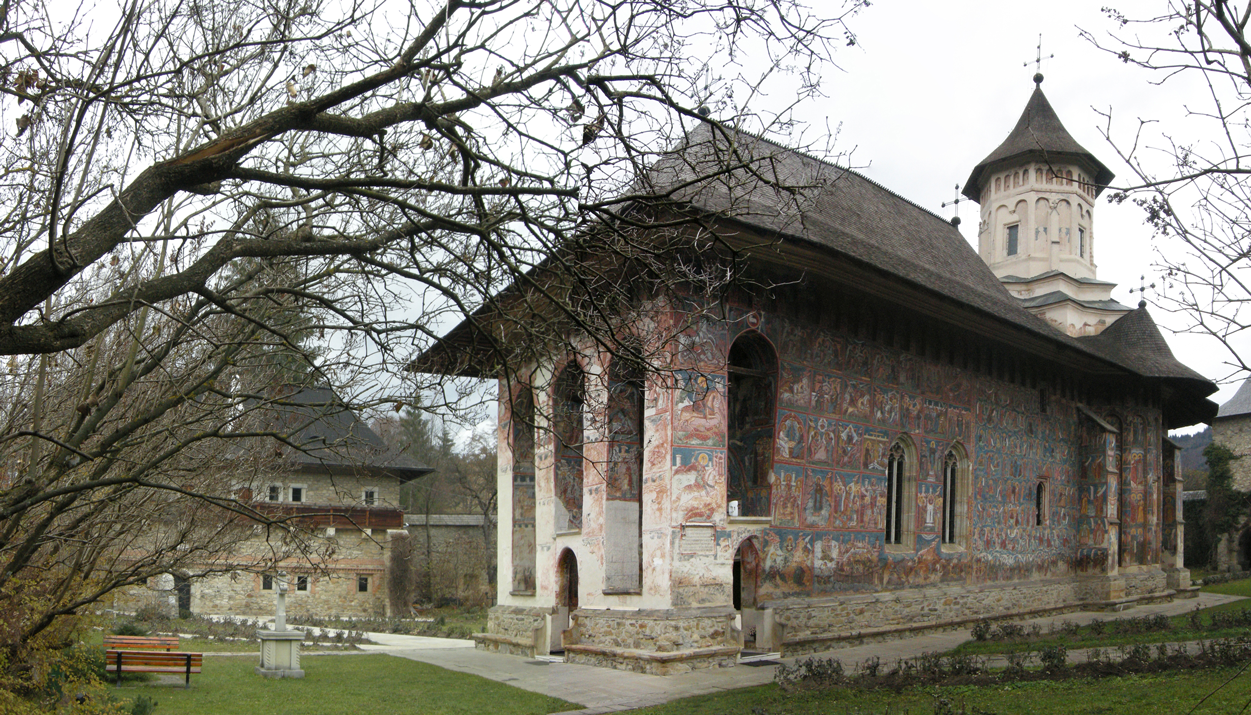
Biserica Bunei Vestiri – Moldoviţa are hramul Buna Vestire; rezidită de domnitorul Petru Rareş pe un amplasament mai vechi; unul dintre cele mai importante monumente de artă veche romanească; picturi murale din 1537, la interior si exterior; tema principală este – Asediul Constantinopolului.
Church of St. Nicholas, Probota Monastery
-
Church of St. Nicholas, Probota Monastery
1993/ Ref: 598bis
Biserica Sf Nicolae – Probota are hramul Sf. Nicolae; ctitorie a lui Petru Rareş la 1530; pictura interioară (restaurată) şi exterioară (distrusă) din 1532; arhitectura este reprezentativă pentru Moldova secolului al XVI-lea.
Church of the Holly Cross (Rood), Patrauti
-
Church of the Holly Cross, Patrauti
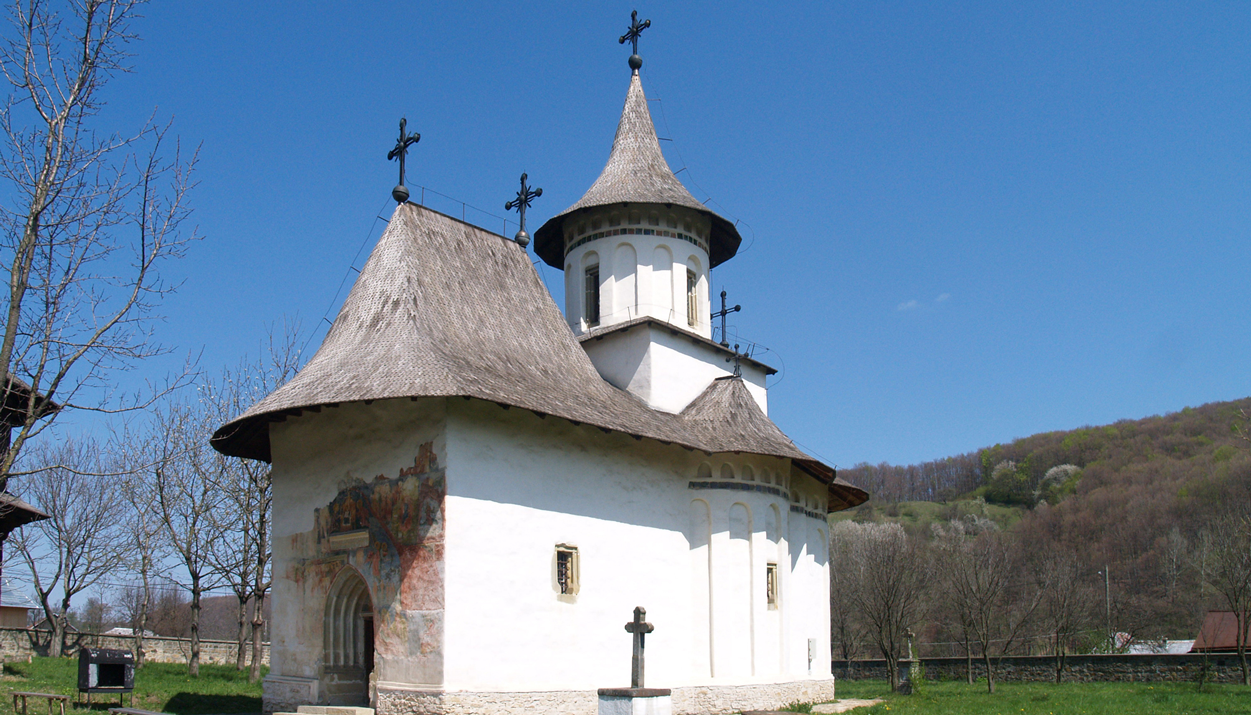
Are hramul Sfânta Cruce; ridicata de Ştefan cel Mare la 1487; mici dimensiuni, dar foarte frumos proporţionată; plan triconc cu turla pe naos; foloseşte un element specific arhitecturii moldoveneşti – arcele piezişe; pictura interioară deosebit de valoroasă – tabloul votiv cu scena „Plângerii” şi „Cavalcada sfinţilor militari”.
Church of St. George, Voronet Monastery
-
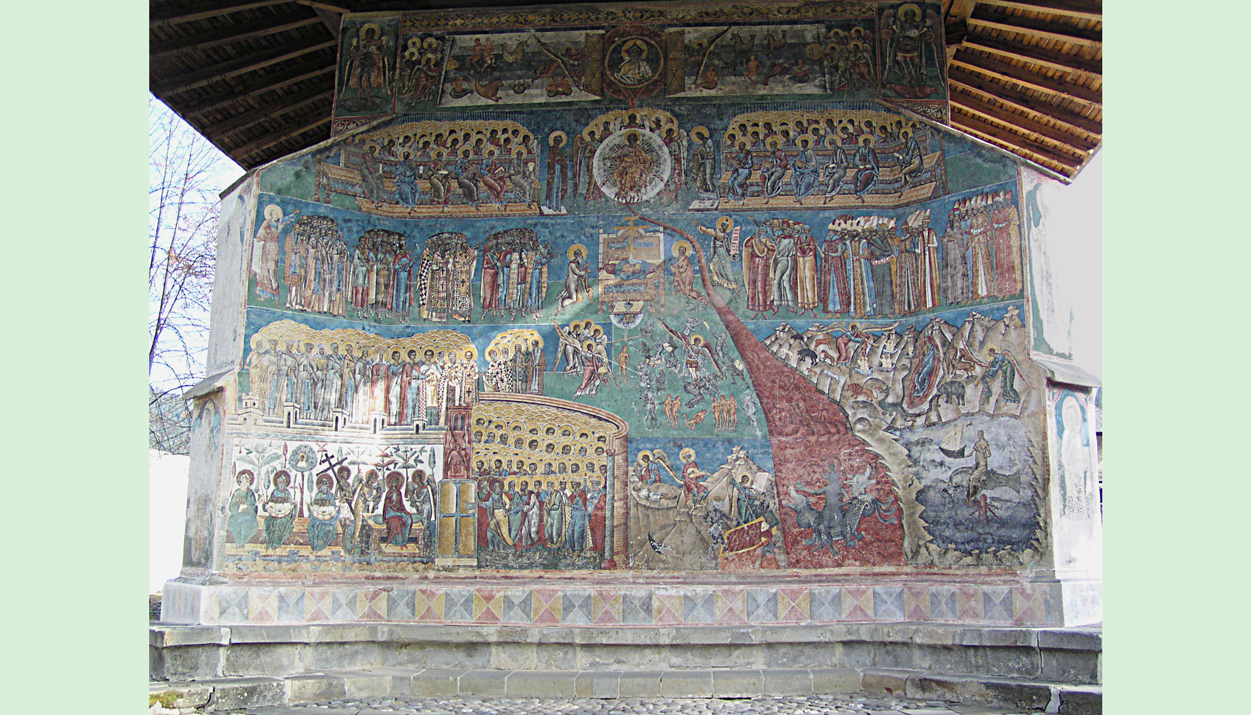
West Facade. The Last Judgement
-
Church of St. George, Voronet Monastery
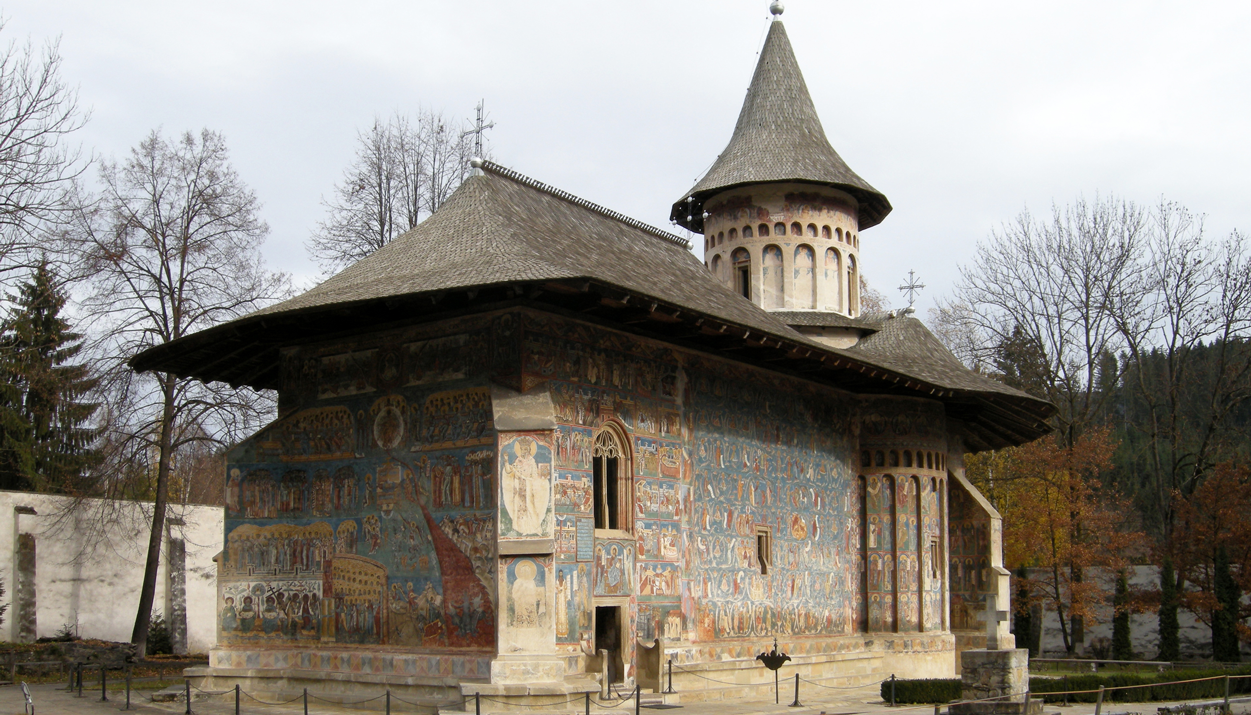
Are hramul Sf. Gheorghe; ridicată de Ştefan cel Mare la 1488; plan triconc, turlă pe naos; în naos picturi originale; din 1547 pridvor închis şi pictură exterioară (“albastrul de Voroneţ”); tema principală a picturii – Judecata de Apoi.
Church of the Beheading of St. John the Baptist
-
Church of the Beheading of St. John the Baptist
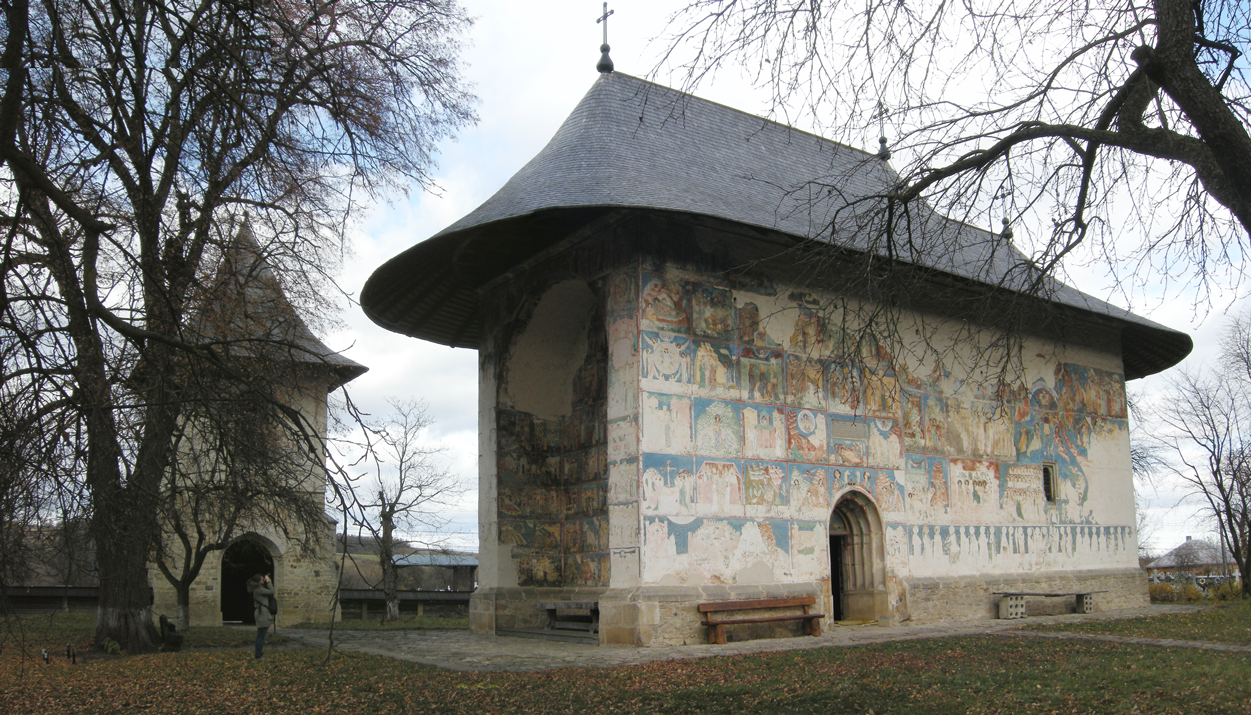
Are hramul Tăierea capului Sf. Ioan Botezatorul; ridicată la 1503 de către pârcălabul Luca Arbore; plan longitudinal fără turlă; în naos două nişe practicate în grosimea zidurilor, în chip de abside; la exterior amplă absidă pentru masa pomenilor (caracteristică ce mai apare la o altă singură biserică); pictură din 1541.