-
Wooden Churches of Maramures
1999/ Ref: 904
Criterion
Criterion (iv) The Maramureș wooden churches are outstanding examples of vernacular religious wooden architecture resulting from the interchange of Orthodox religious traditions with Gothic influences in a specific vernacular interpretation of timber construction, showing a high level of artistic maturity and craft skills.
Wooden Churches of Maramureș
These eight wooden churches are located in the Northern mountainous Romanian region of Maramureș, in eight different villages – The Church of the Presentation of the Virgin at the Temple (Bârsana), The Church of Saint Nicholas (Budești), The Church of Holy Paraskeva (Desești), The Church of the Nativity of the Virgin (Ieud Deal), The Church of the Holy Archangels (Plopiș), The Church of the Holy Paraskeva (Poienile Izei), The Church of the Holy Archangels (Rogoz), The Church of the Holy Archangels (Șurdești).
They are representative for the wooden church architecture of this part of Europe, built in the 18th and 19th centuries. These churches have preserved their traditional plan, composed of a naos and pronaos in the shape of a rectangle, and a pentagonal recessed sanctuary. A portico was added to the western facade of some of them. They are covered by a high, steep, double-pitched roof from which soars a tall bell tower with a gallery similar to stone Gothic churches, giving the churches their characteristic silhouette. The churches stand on a base made of stone blocks and pebble fillings.
The wooden beams (in oak or pine) are arranged according to the Blockbau system and assembled by joints in the shape of a V, U, or T, to make the construction stable and flexible. The beams of the upper part of the walls extend beyond the junction points to form supporting consoles for the framework. The outer walls are usually embellished with a torsade motif, while structural components (consoles, door and window frames, balustrade, bell tower gallery, etc) are adorned with sculpted decorations.
The three inner areas are covered by ceilings or vaults of different forms. The inner walls were completely covered with paintings during the second half of the 18th century and first half of the 19th century by travelling painters whose names are known. These painters belong to post-Byzantine traditions, but their iconography also reflects the ideas conveyed by the Reformation and Counter-Reformation. The canons of Byzantine art are reinterpreted in a graphic and decorative manner to create a more naive and refreshing style of painting. At the beginning of the 19th century, Baroque and Rococo paintings made their appearance in the wooden churches of Maramureș, probably through the influence of neighbouring countries.
The selected eight churches are outstanding examples of a range of architectural solutions from different periods and areas. They show the variety of designs and craftsmanship adopted in these narrow, high, timber constructions with their characteristic tall, slim clock towers at the western end of the building, either single- or double-roofed and covered by shingles. As such, they are a particular vernacular expression of the cultural landscape of the area.
The wooden church in Plopiș
-
The wooden church in Plopiș
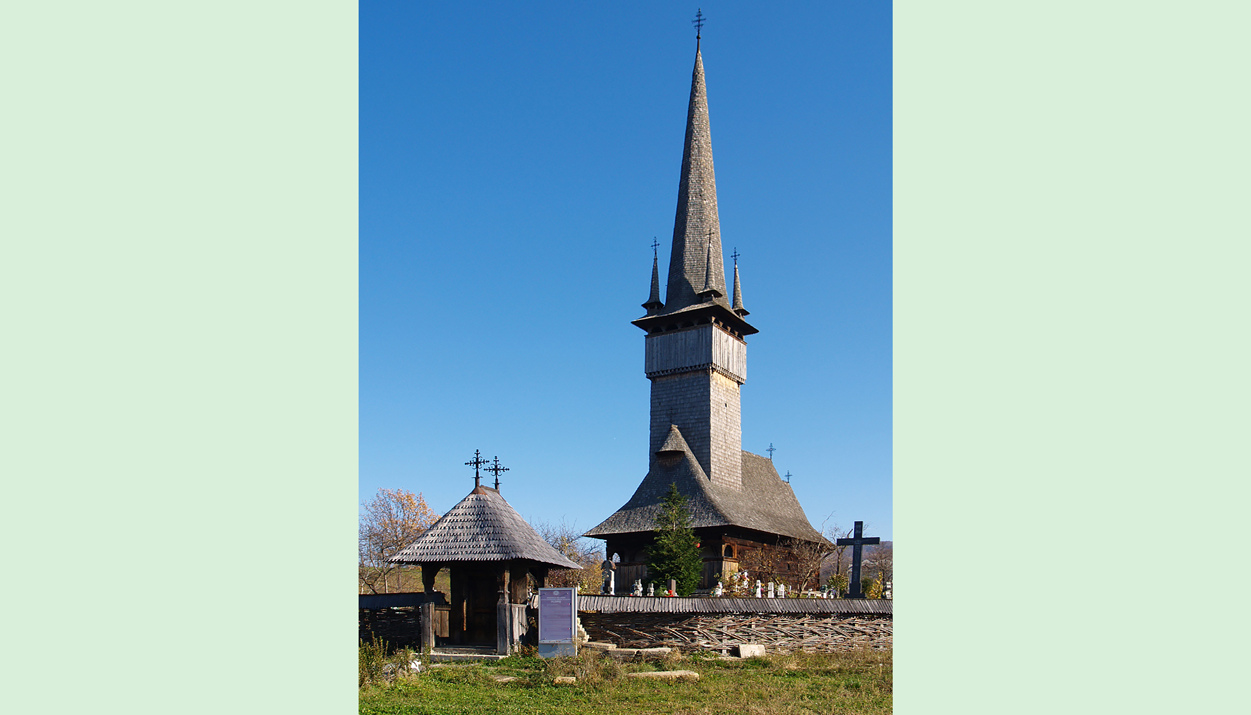
Biserica de lemn „Sf. Arhangheli Mihail şi Gavriil” a fost construită în 1766 de meşterul Ion Macarie. În secolul XIX au fost adăugate pridvorul pe două niveluri şi turnul-clopotniţă de pe pronaos. Biserica are plan dreptunghiular, cu pridvor pe două niveluri pe vest şi absida altarului poligonală, în retragere. Acoperiş unitar, cu dublă poală; turn-clopotniţă pe pronaos, cu arcade pe stâlpi şi acoperiş piramidal, cu turnuleţe de colţ. La exteriorul bogată decoraţie sculptată. La interior pictură murală din 1783. Este cea mai înaltă biserică de lemn-monument istoric din ţară, turnul-clopotniţă având înălţimea de 54 m.
The wooden church in Poienile Izei
-
The wooden church in Poienile Izei
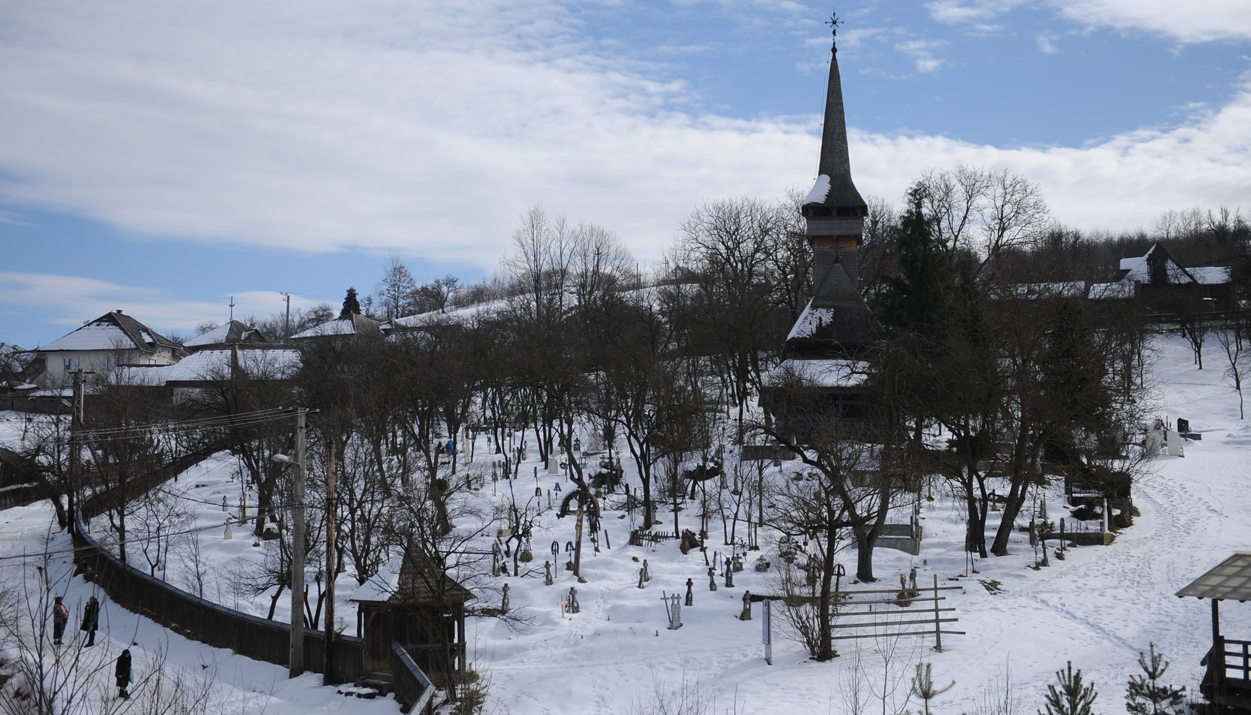
Biserica de lemn „Cuvioasa Paraschiva” a fost construită în 1632, supraînălţată în prima jumătate a secolului XVIII, pridvorul fiind adăugat în prima jumătate a secolului XIX. Are plan dreptunghiular cu pridvor pe vest şi absida altarului rectangulară, în retragere. Acoperiş cu dublă poală şi turn-clopotniţă pe pronaos. Pictură murală din 1794, cu excepţia proscomidiei care a fost pictată în 1785.
The wooden church in Rogoz
-
The wooden church in Rogoz
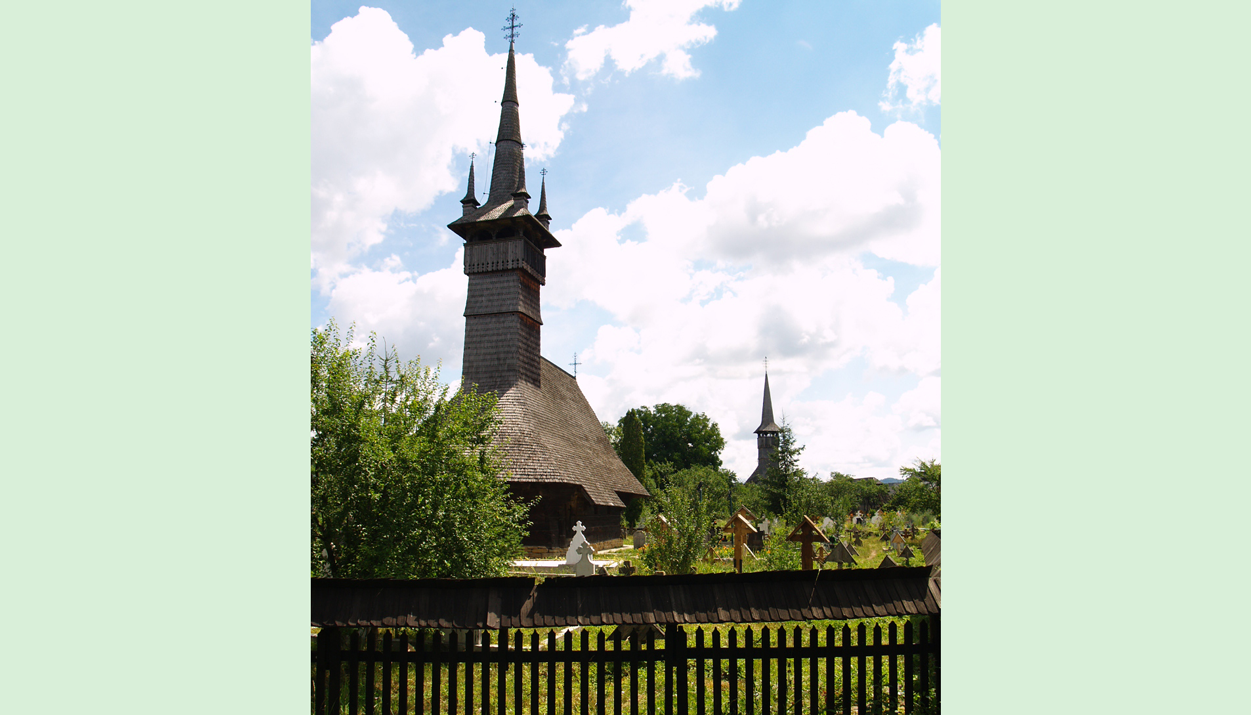
Biserica de lemn „Sf. Arhangheli Mihail şi Gavriil” a fost construită în 1663, pe locul unei biserici mai vechi. Are un tip de plan mai rar întâlnit: pronaos poligonal, cu acces pe sud, naos dreptunghiular şi absida altarului în retragere, poligonală, cu 7 laturi. Faţada sudică are o bogată decoraţie sculptată. La interior pictura, datând de la sfârşitul secolului XVIII, impresionează prin decorativismul ansamblului şi prin cromatica luminoasă.
The wooden church in Șurdești
-
The wooden church in Șurdești
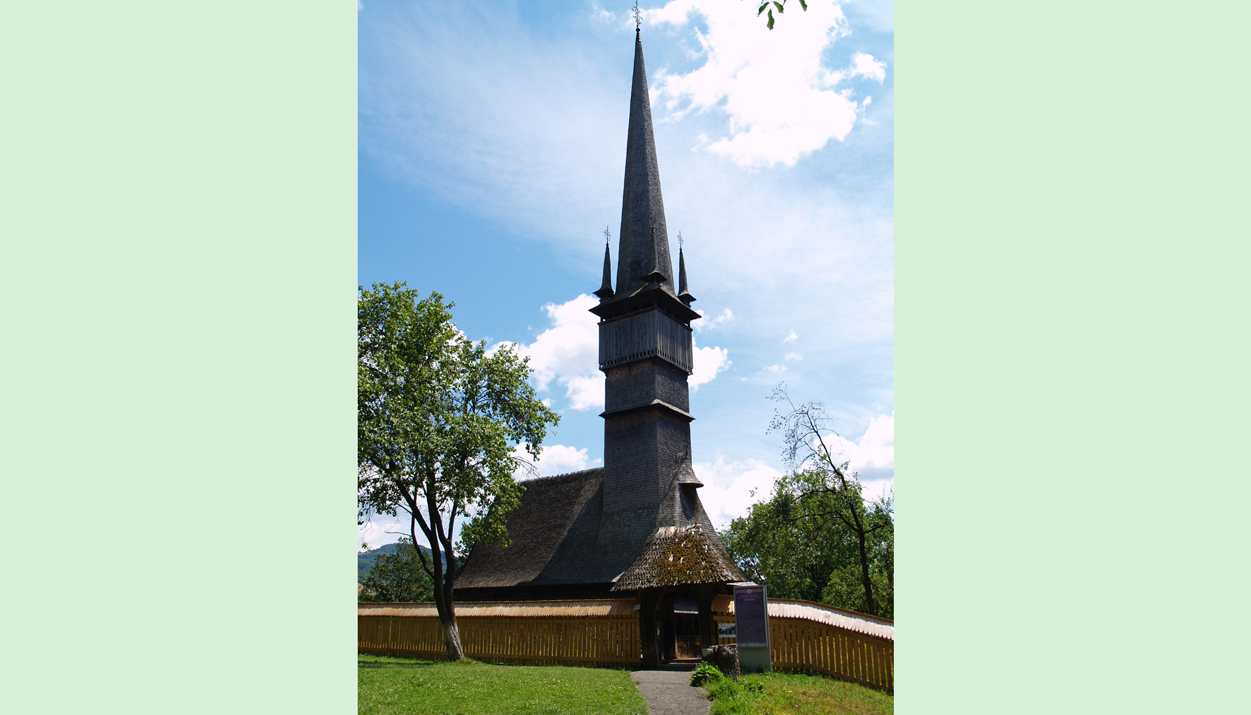
Biserica de lemn „Sf. Arhangheli Mihail şi Gavriil” a fost construită în 1766 de meşterul Ion Macarie. În secolul XIX au fost adăugate pridvorul pe două niveluri şi turnul-clopotniţă de pe pronaos. Biserica are plan dreptunghiular, cu pridvor pe două niveluri pe vest şi absida altarului poligonală, în retragere. Acoperiş unitar, cu dublă poală; turn-clopotniţă pe pronaos, cu arcade pe stâlpi şi acoperiş piramidal, cu turnuleţe de colţ. La exteriorul bogată decoraţie sculptată. La interior pictură murală din 1783. Este cea mai înaltă biserică de lemn-monument istoric din ţară, turnul-clopotniţă având înălţimea de 54 m.
The wooden church in Ieud
-
The wooden church in Ieud. Mural paintings. Archangel and Patriarchs of the Last Judgement
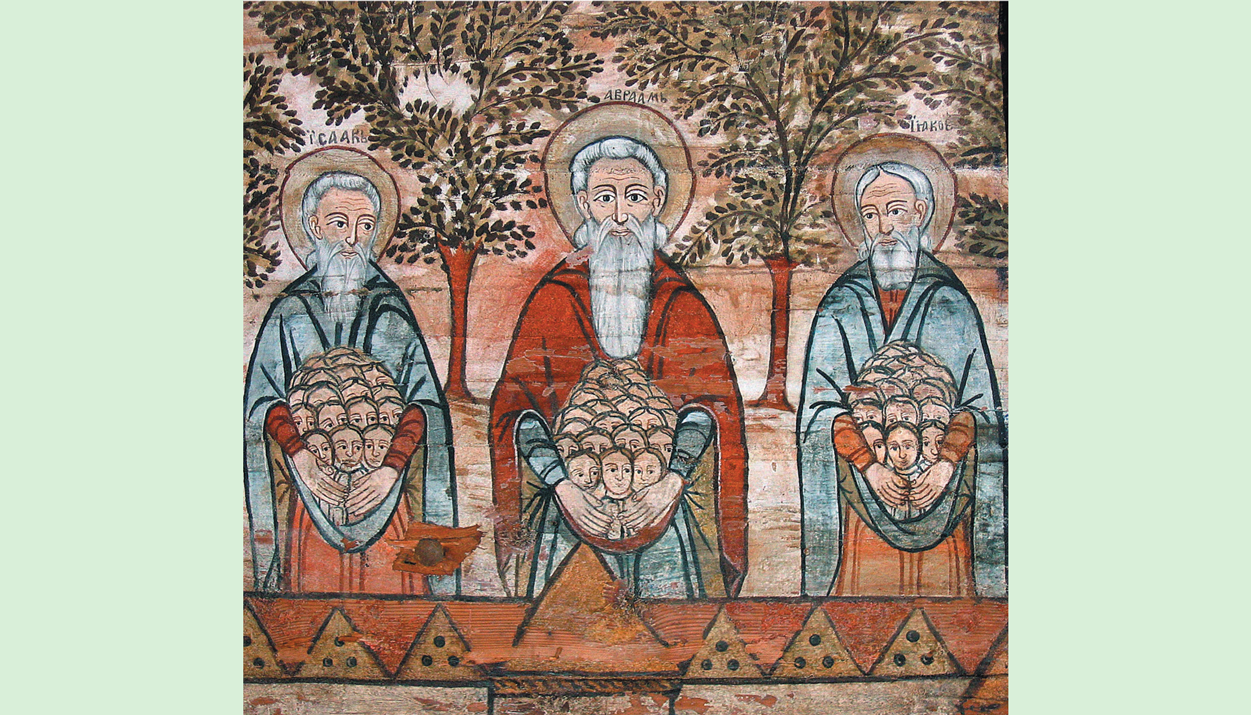
-
The wooden church in Ieud. Mural paintings. Archangel and Patriarchs of the Last Judgement
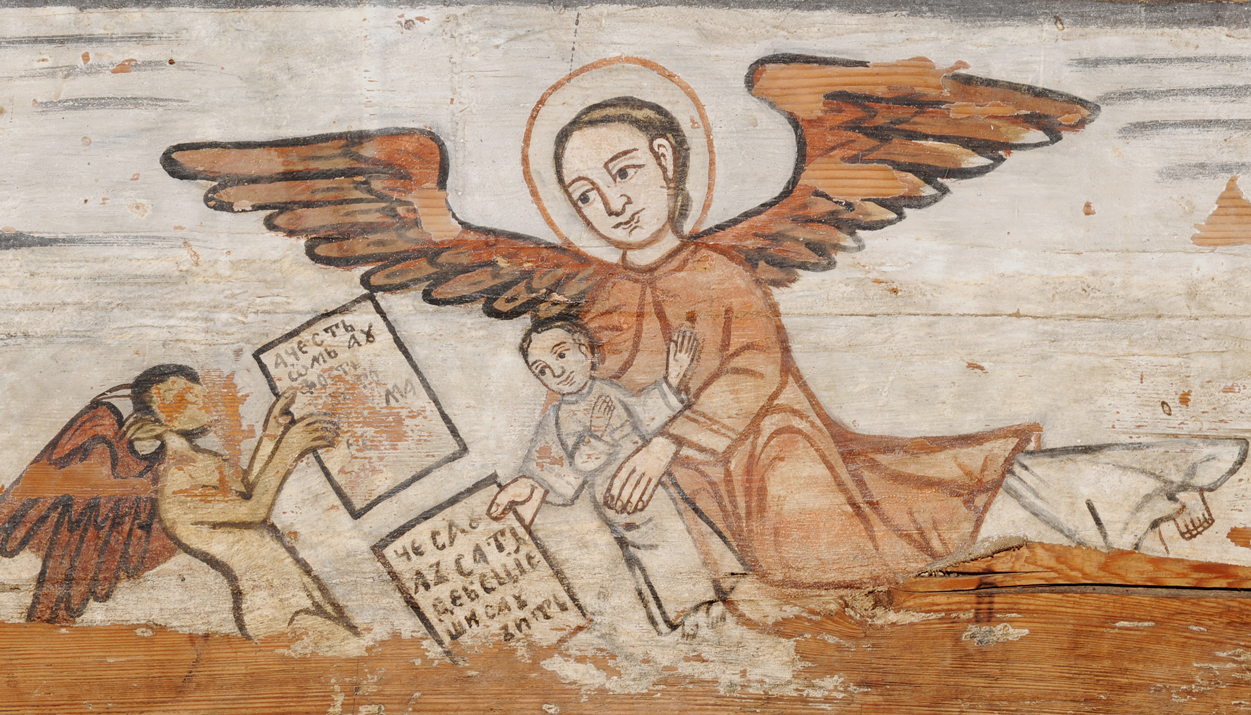
Biserica de lemn “Naşterea Maicii Domnului – Din deal” a fost construită la începutul secolului XVII, reparată în 1760, modificată la interior în 1827. Plan dreptunghiular, cu absida altarului poligonală, în retragere. Acoperiş unitar, cu dublă poală deasupra naosului şi pronaosului; turn-clopotniţă pe pronaos. La interior este de remarcat bolta pe bârne în consolă, cu trei retrageri succesive şi intradosul decorat cu arcaturi. Pictură murală din 1782.